



BTR PEN
Broken Instrument Retrieval
Visibility, controlled access and secure engagement of the fragment.
10 October 2026
Clinical insight
Separated instruments are a familiar challenge in Endodontics.
When retrieval is the chosen approach, the procedure depends on three essentials: visibility, controlled access and secure engagement of the fragment. This is where BTR PEN enters the workflow.
From visibility to engagement
Under magnification, the first objective is to clearly identify the separated instrument and gain sufficient access to its coronal portion. Depending on the clinical situation, ultrasonic tips can be used to expose the fragment and create the space required for subsequent engagement.
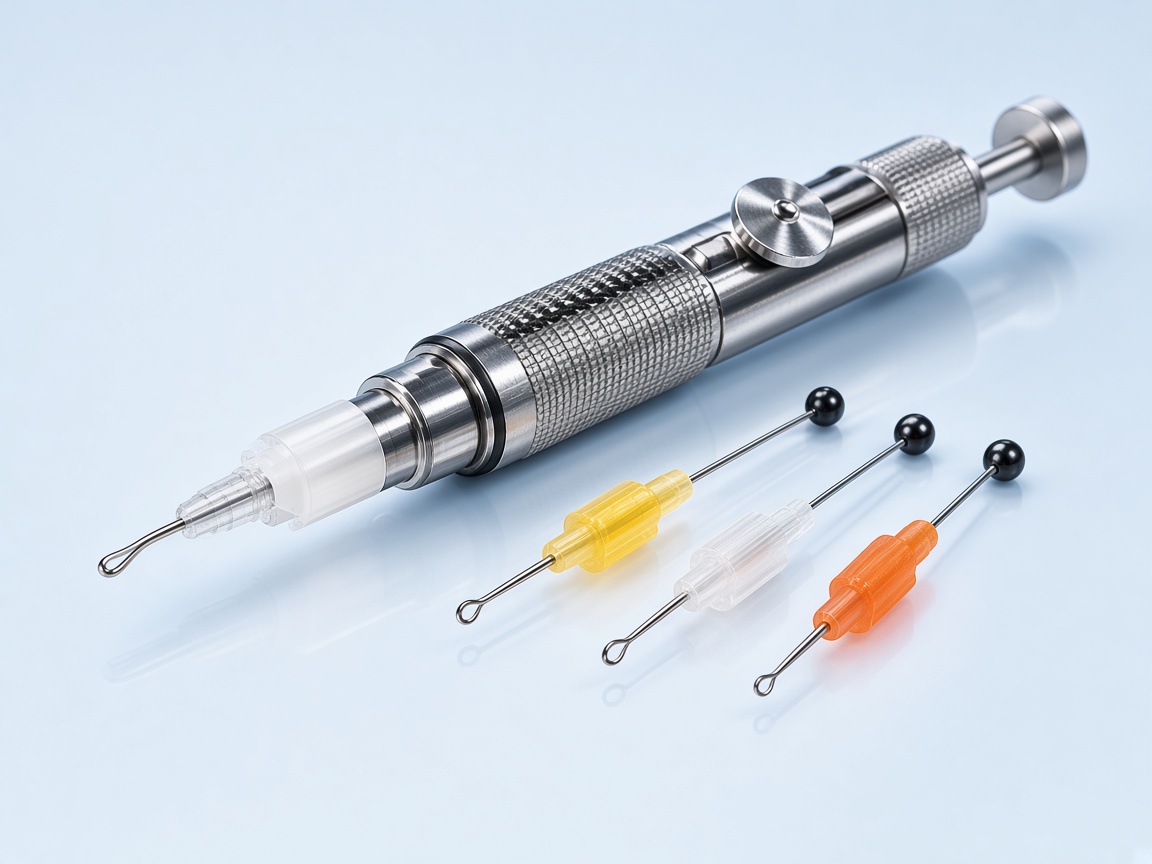
Once the fragment is accessible, BTR PEN provides a mechanical method of capturing it through a fine nitinol loop designed to encircle the separated instrument. The loop is tightened around the fragment before controlled withdrawal.
CERKAMED
Tip sizes and device
CERKAMED specifies three tip sizes — Ø 0.3, 0.4 and 0.5 mm — allowing the clinician to select the loop according to the available space and clinical situation. The stainless-steel BTR PEN is reusable, while the nitinol loop tips are single-use.
- Loop tips Ø 0.3, 0.4 and 0.5 mm
- Reusable stainless-steel BTR PEN handpiece
- Single-use nitinol loop tips
A simple clinical sequence
The role of BTR PEN becomes particularly clear when the procedure is viewed as a sequence:
Visualise Expose Mobilise Engage Retrieve
The device is used at the engagement and retrieval stage, once enough of the fragment is accessible for the loop to be positioned securely around it. This controlled engagement is particularly useful when the fragment cannot be predictably grasped with conventional instruments.
The retrieval moment
Once the loop has been positioned and tightened, the fragment can be withdrawn while maintaining control through the BTR PEN mechanism. The small dimensions of the nitinol loop allow the clinician to work within the restricted space of the root canal while maintaining direct visual control of the fragment.
The clinical photographs are particularly important at this stage: rather than describing the procedure in excessive detail, they can show the progression from exposure to engagement and final retrieval.
What does the evidence show?
Current published evidence on BTR PEN is predominantly in vitro. A recent CBCT-based study comparing BTR-Pen, ultrasonic and Masserann techniques reported retrieval success rates of 86.7% for BTR-Pen, 90% for ultrasonics and 70% for Masserann. In the same experimental model, BTR-Pen and ultrasonic retrieval resulted in significantly less dentine loss than the Masserann technique.*1
Earlier laboratory research also specifically evaluated the BTR-Pen system for the removal of different types of fractured endodontic instruments.*2
Clinical takeaway
BTR PEN adds a dedicated loop-based engagement option to the armamentarium for broken instrument retrieval. Its role is straightforward: once the fragment has been visualised, adequately exposed and, where necessary, mobilised, the nitinol loop allows it to be securely engaged for controlled retrieval.
Visualise Expose Mobilise Engage Retrieve
References
- Balkanlıoğlu E, Kamalak A, Güner B. Comparison of the ultrasonic, Masserann, and BTR-pen techniques for removing fractured instruments with dental microscope: a CBCT-based in vitro study. Acta Odontologica Scandinavica. 2026;85:469–475. doi:10.2340/aos.v85.46531
- Dulundu M, Helvacioglu-Yigit D. The Efficiency of the BTR-Pen System in Removing Different Types of Broken Instruments from Root Canals and Its Effect on the Fracture Resistance of Roots. Materials. 2022;15(17):5816. doi:10.3390/ma15175816


